Tempest weather station review: four years on the original, five months on the ’26, and what 30 stations’ data show
By Derek · Last updated October 18, 2026
The verdict
Would I buy it again? Yes. Four years in, it’s still the station I’d choose: nothing moves, there’s very little to look after, and a reading arrives every minute. It isn’t trouble-free, though: my barometer failed. Register your purchase date, and check your pressure against a nearby airport now and then.
That verdict comes from four years with the original Tempest, five months with the Tempest ’26 that replaced it, and 91.5 station-years of readings from the 30 Tempest stations Halcyon watches.
Who wrote this, and how we measured
I’m Derek. I’ve run a Tempest at home since April 2022: the original until May 2026, and a Tempest ’26 since. I also build Halcyon, a display for Tempest stations.
Full disclosure: Halcyon is a display for Tempest stations, with a free version and paid plans, so we do well when Tempests do. WeatherFlow doesn’t pay us, we don’t sell Tempests, and the links to buy one here are plain links.
Halcyon keeps the history of every station whose owner uses its History feature, and checks it for failing sensors; a person reviews everything those checks find before anyone is told. As of October 14, 2026 that’s 30 stations and 33,423 station-days, going back to 2020: about 47.6 million one-minute readings.
Thirty stations is a small sample, so you’ll see counts out of 30, never percentages, and nothing on this page identifies anyone’s station but mine.
What the Tempest ’26 changed
WeatherFlow announced the Tempest ’26 in November 2025. By its account, the ’26 has larger solar panels and a redesigned charging system, a battery you can remove and replace, upgraded temperature, humidity and rain sensors, and an improved weather- and water-resistant coating. It also promised ongoing firmware updates that improve the reliability of rain measurement across all models.
That list covers most of the places our fleet saw trouble on the original: power, humidity and temperature, plus rain, the reading owners argue about most. The barometer, the wind sensor and the lightning sensor aren’t on it, so what we found about those still applies.
Mine is the only ’26 I can confirm in our fleet, with 155 days of data: the stations all report the same hardware revision, so the data can’t tell the two apart. That’s enough to report what it has done, but too little to say anything is fixed, and its first winter is still ahead. I’ll update this page in the spring.
Setup and build
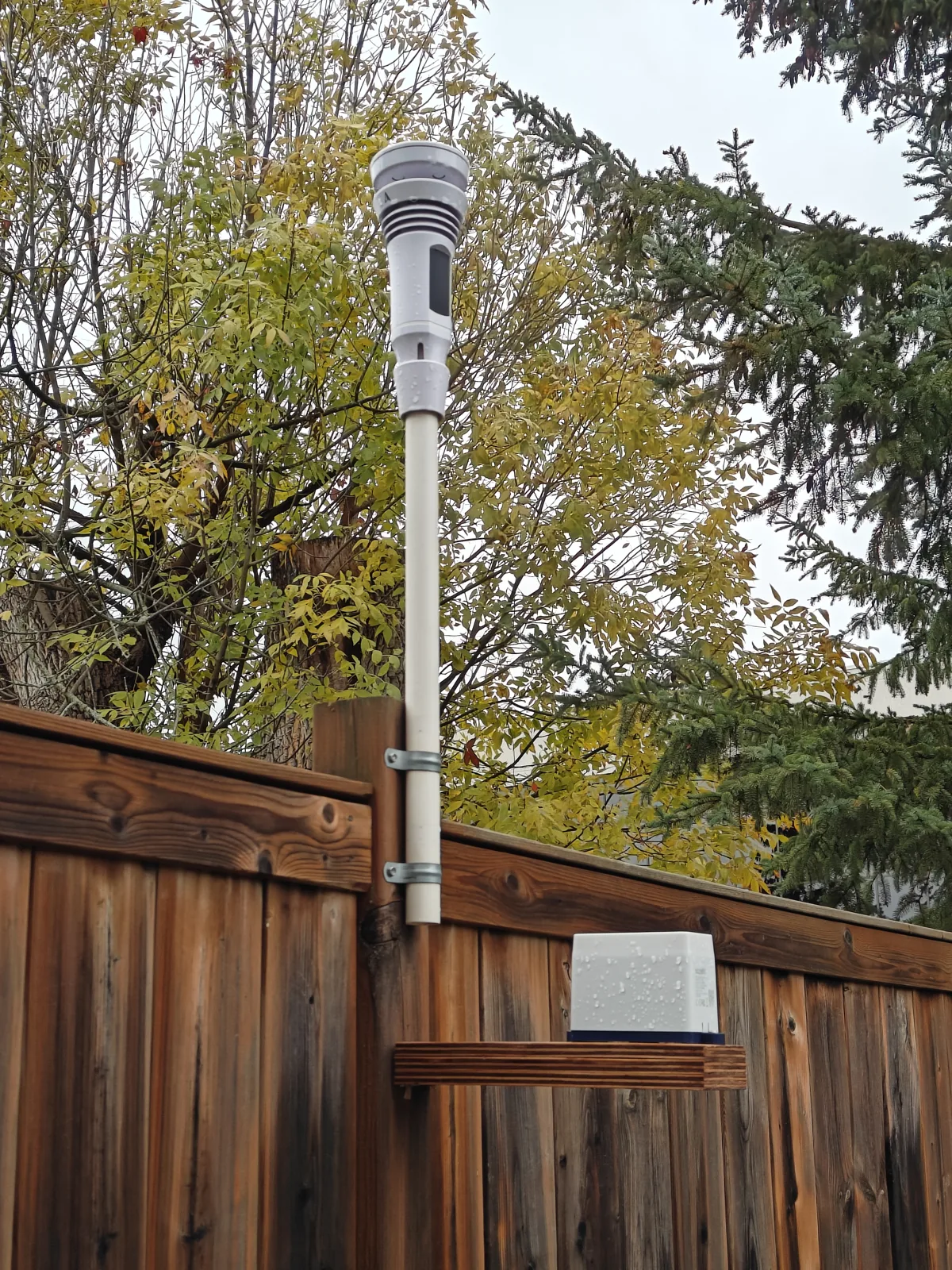
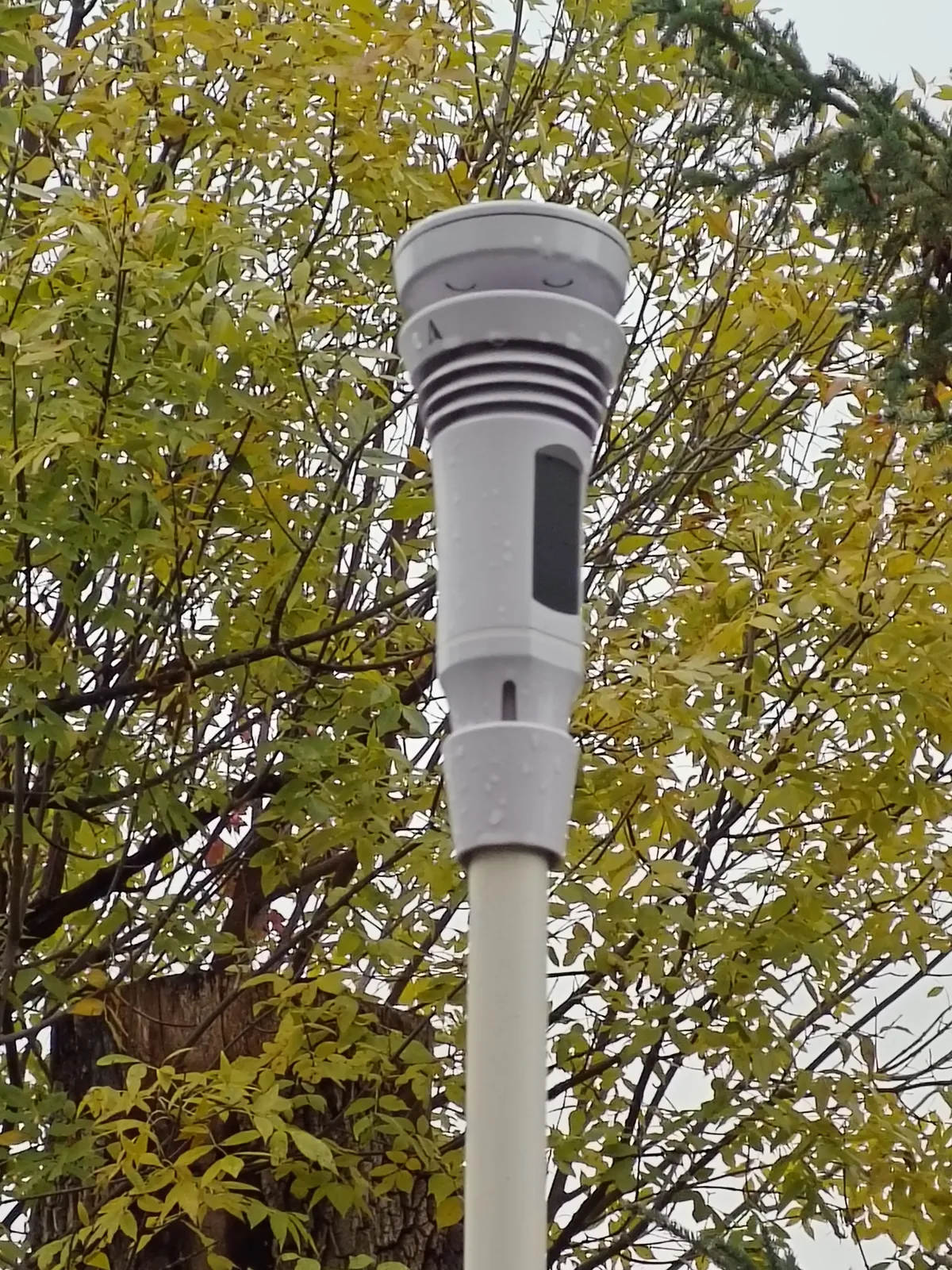
The Tempest is a single unit on a pole that talks to a small hub indoors, and the hub joins your Wi-Fi. Setup took me under fifteen minutes, both times. The first install took a little longer, because that’s when the mount goes up.
Temperature and humidity
The Tempest sends temperature and humidity every minute, and on most days there’s nothing to report about either.
In wet weather the humidity sensor can stop moving. On 61 days across 12 of 30 stations it reported one value for a full day, 58 of them at 95% or more. It rained at least 1 mm (0.04 in) on 45 of those days. Every spell has ended; the longest lasted three days.
If yours sticks near 100% in rain or fog, give it time. If it sticks for days with no rain, that’s worth reporting to WeatherFlow. My ’26 hasn’t done it yet.
Temperature sensors do fail: 5 of 30 stations recorded temperatures no weather produces. If yours suddenly reads far from every forecast, check the obvious first (direct sun, something new beside it), then contact WeatherFlow support.
Drift is harder to spot. 2 of 30 stations read too warm or too cold, by as much as 4.4 °C (7.9 °F), for up to seventeen months on end, and every reading still looked believable. If yours drifts, look at what has changed around it, such as new shade, a wall or a vent, and check the radiation shield is clean, before suspecting the sensor.
Rain
The Tempest has no bucket. It feels raindrops landing on top of the unit and works out the rain from them, so there’s nothing to clog or empty, and it’s the reading Tempest owners argue about most. A week after the ’26 went up, I put an Ecowitt tipping-bucket gauge beside it.
Over 143 days from May 23, 2026 to October 13, 2026, the gauge collected 546.9 mm (21.53 in) and the Tempest ’26 reported 552.4 mm (21.75 in). On the 43 days either saw at least 1 mm (0.04 in), the two agreed within 20%, or within half a millimetre, on 16. The Tempest read higher on 20 and lower on 7.Two days are left out: on each, the gauge logged exactly 5.3 mm (0.21 in) while the Tempest recorded no rain at all, which looks like the gauge being handled rather than weather.
A tipping bucket isn’t the truth either: it under-reads in downpours and wind, and at half-hour resolution the gauge’s last half hour before midnight can be missed. These are two instruments at one site, and neither is a reference.
WeatherFlow can also correct rain totals after the fact; it calls this RainCheck. In the data apps receive, on 3 of 29 stations that saw rain the corrected daily total sometimes differed from the uncorrected one. On the rest, mine included, the two always matched.
If an exact rain total matters to you, for a garden, a farm or a rain-gauge network, put a tipping bucket beside it.
Wind
The wind sensor is ultrasonic, with no cups or vanes to wear out or seize, and it sends a fresh reading every three seconds. When the battery runs low it samples less often to save power; WeatherFlow’s battery guide explains when. Height matters most: a wind sensor on a short pole beside the house measures the house, so mount it as high and as clear as you safely can.
Pressure
This is the part I know best, because mine failed. By July 2024 my barometer was reading about 104 mb (3.07 inHg) below the other Halcyon stations, after allowing for altitude, and it went on doing so until May 2026: 406 days in twenty separate stretches.
I noticed because my own Halcyon display kept the pressure reading front and center all day. WeatherFlow replaced the unit under warranty, and the claim went smoothly.
Across the fleet, 3 of 30 stations, mine included, have had a barometer read far from the others for weeks at a time. WeatherFlow’s list of changes for the ’26 doesn’t include the barometer, so this still applies. Checking yours takes two minutes: look up the current pressure at your nearest airport (search its four-letter code and “METAR”) and compare it with your station’s sea-level pressure. If yours is tens of millibars off and stays that way, contact WeatherFlow.
Lightning, and the “hail” flag
The Tempest picks up lightning strikes and estimates how far away they are. We can’t tell you how accurate it is, because that needs a lightning network to check against, and we don’t have one.
It also marks some minutes as hail. WeatherFlow’s developer documentation lists the flag as none, rain or hail, and its local-network version adds “rain + hail”, marked experimental. In our data, the flag tracks heavy rain. Across the fleet it fired in about 65 hours per station-year, and rain fell in 5,803 of the 5,926 flagged hours, a median 3.1 mm (0.12 in) in the hour. On my ’26 it marked 301 minutes on thirty-two days, while rain was falling at a median 24.9 mm/h (0.98 in/h). Read the flag as “it’s pouring”.
Power and winter
The Tempest runs on a solar panel and a rechargeable battery, and most of the year you never think about it. 9 of 30 stations dropped into power saving often enough for our checks to flag it: one was short of daylight in the dark months, two sat in shade, six ran short even with the sun out.
WeatherFlow’s battery guide explains the voltage: charging stops around 2.6 to 2.8 V, and a full battery then settles to about 2.55 V. On current firmware, below about 2.65 V it samples the wind every 6 or 15 seconds instead of every 3 when the wind is light; older firmware went further on a nearly flat battery, slowing every sensor and pausing the rain sensor. My ’26 typically dips to 2.62 V overnight and reaches 2.79 V by day. The guide doesn’t say whether the ’26’s new battery and charging change these numbers. Its first winter is ahead, and I’ll add it here.
Give the panel open sky toward the equator, keep snow off it, and watch the voltage through its first winter. On the ’26, the battery can now be replaced without replacing the station.
Reliability over the years
The typical station in our fleet missed about 11 minutes of readings a day, counting the minutes a station skips to save power. Between each station’s first and last day in our archive, 260 whole days are missing, whether the station went quiet or our import missed them.
- Ran short of power 9 of 30
- Impossible temperatures 5 of 30
- Barometer far off 3 of 30
- Slow temperature drift 2 of 30
2 of 30 stations, mine included, are on a replacement unit we know of. My warranty claim went smoothly. Keep your receipt and register your purchase date: the warranty is two years.
What it costs
The Tempest Weather Station is $349 at WeatherFlow’s store (checked October 18, 2026), with the hub and mounts, and ships to the US, Canada and the UK. It comes with a two-year limited warranty for the original buyer, and that warranty doesn’t cover Tempests from unauthorized sellers, which WeatherFlow says currently includes every seller on Amazon. The Tempest app is free, and on the ’26 the battery can be replaced on its own.
Who it’s for
It suits anyone who wants a station that goes up in an afternoon, has no moving parts, sends wind every few seconds, and works with lots of apps, ours included.
Think twice if an exact rain total matters most, in which case add a tipping bucket, or if everything has to run without the internet. The app and most integrations rely on WeatherFlow’s servers, though the hub also broadcasts readings on your local network.
Getting the most from it
- Buy from WeatherFlow or an authorized dealer, so the warranty applies.
- Register your purchase date, and keep the receipt.
- Mount it high, clear and in full sun, away from walls, roofs, vents and dryer outlets.
- On day one, check its sea-level pressure against your nearest airport.
- Expect humidity to sit near 100% for a day in wet weather, and to come back after.
- Watch the battery voltage through its first winter.
- If rain totals matter, add a tipping-bucket gauge.
- Read the “hail” flag as heavy rain.
Questions Tempest buyers ask
Is the Tempest weather station accurate?
Mostly, with known weak spots. Wind arrives every three seconds and temperature every minute, from sensors with no moving parts. Rain is the most argued-about reading. Against a tipping bucket at my site, the Tempest ’26 reported 552.4 mm (21.75 in) to the gauge’s 546.9 mm (21.53 in) over 143 days. In wet weather the humidity sensor can stick near 100% for a day, and barometers do fail: 3 of 30 stations in our fleet, mine included, have had one read far off.
Does the Tempest detect hail?
We can’t confirm it. In our data, the flag WeatherFlow documents as hail came with rain in 5,803 of the 5,926 hours it fired, so we read it as heavy rain.
How long does a Tempest last?
For years. Our oldest records go back to 2020. 2 of 30 stations in our fleet, mine included, are on a replacement unit we know of.
Does the Tempest work in winter?
Yes, though power can run short in any season: 9 of 30 stations in our fleet dropped into power saving often enough for our checks to flag it (six even with the sun out, two in shade, one short of daylight in the dark months). The Tempest ’26 has larger solar panels, a redesigned charging system and a replaceable battery.
Should I buy the Tempest ’26 or the original?
WeatherFlow says the ’26 changes power, temperature, humidity and rain; the barometer, wind and lightning sensors aren’t on its list of changes. If your original works, those are the parts to weigh.
Is the Tempest app free?
Yes. The Tempest Weather app is listed as free, and it needs the Tempest station, which is sold separately.
Where Halcyon fits
Halcyon is the display I built for my own Tempest: your station, live, on a TV, monitor or tablet all day. On Plus, it also runs the checks behind this review on your station’s whole history and tells you when something looks wrong. Try the free version or see the plans.